Nasturtium 'Indian Cress'
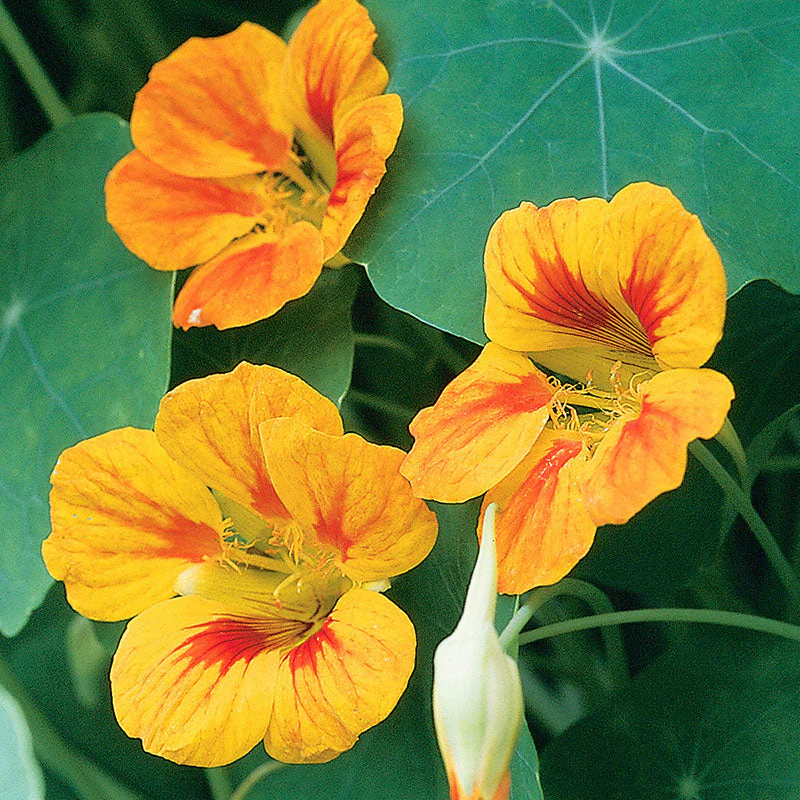
From the Greek "traopaeum," a pillar erected on the battlefield to display the armor of vanquished foes, for Linnaeus thought the leaves resembled a shield, and the flowers spear-pierced, blood-stained helmets (Proctor). It was grown for its edible qualities; the seeds pickled for a caper substitute or ground for mustard, and the leaves and flowers lent a lively, peppery taste to salads. The fragrant flowers in vivid shades of yellow and red and mottled and softer hues show off to best advantage tied to a fence or allowed to trail up to six feet long.
Nasturtium 'Indian Cress'
From the Greek "traopaeum," a pillar erected on the battlefield to display the armor of vanquished foes, for Linnaeus thought the leaves resembled a shield, and the flowers spear-pierced, blood-stained helmets (Proctor). It was grown for its edible qualities; the seeds pickled for a caper substitute or ground for mustard, and the leaves and flowers lent a lively, peppery taste to salads. The fragrant flowers in vivid shades of yellow and red and mottled and softer hues show off to best advantage tied to a fence or allowed to trail up to six feet long.
Product Information
Product Information
Shipping & Returns
Shipping & Returns
Description
From the Greek "traopaeum," a pillar erected on the battlefield to display the armor of vanquished foes, for Linnaeus thought the leaves resembled a shield, and the flowers spear-pierced, blood-stained helmets (Proctor). It was grown for its edible qualities; the seeds pickled for a caper substitute or ground for mustard, and the leaves and flowers lent a lively, peppery taste to salads. The fragrant flowers in vivid shades of yellow and red and mottled and softer hues show off to best advantage tied to a fence or allowed to trail up to six feet long.